Life Built One Molecule at a Time
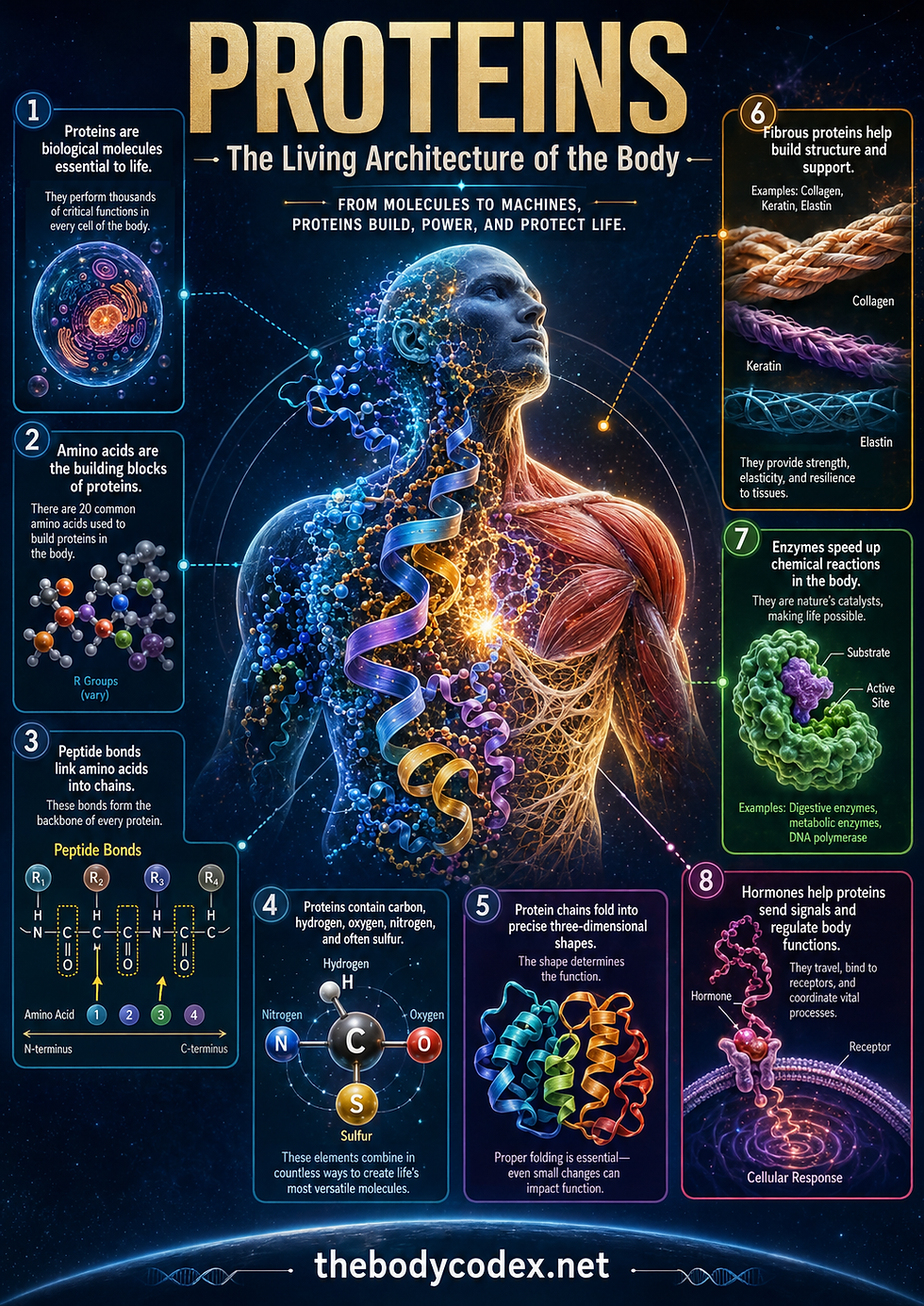
PROTEIN: The Architecture of the Living Body
Every second you are alive, your body is building, repairing, replacing, signaling, transporting, defending, and adapting. Behind much of that work is protein. Protein is present in every cell of the human body and is essential for the structure, function, and regulation of tissues and organs.
Protein is often described as the body's building material, but that description barely captures its importance. Muscles need protein, but so do your skin, bones, blood, enzymes, hormones, antibodies, organs, and countless microscopic structures that keep conscious life functioning.
What Exactly Is Protein?
Proteins are large biological molecules constructed from smaller units called amino acids.
Think of amino acids as letters in an alphabet. The body connects them in different sequences, creating thousands of different proteins—much like letters can be rearranged to create thousands of different words.
Human proteins are primarily composed of the elements:
Carbon • Hydrogen • Oxygen • Nitrogen
Many proteins also contain sulfur, and some interact with minerals and other chemical groups to perform specialized functions.
Amino acids connect through peptide bonds, forming long chains called polypeptides. These chains then fold into extremely precise three-dimensional shapes.
That shape matters.
A protein's shape determines what it can do.
Some become structural fibers. Others become enzymes. Some become hormones. Others become receptors, antibodies, transport proteins, or molecular machines inside cells.
The human body uses 20 common amino acids to construct proteins. Nine are considered essential amino acids, meaning the body cannot manufacture enough of them and they must come from food.
What Does Protein Actually Do?
Protein participates in almost every major biological system.
1. Builds and repairs muscle
Resistance training and everyday activity create microscopic changes within muscle tissue. Dietary amino acids provide raw materials used to repair and remodel that tissue.
But protein isn't just for bodybuilders.
Every person continually loses and rebuilds body proteins.
2. Builds the body's structure
Structural proteins help create:
Skin
Hair
Nails
Tendons
Ligaments
Muscle
Bone matrix
Connective tissue
Collagen, for example, is one of the body's major structural proteins.
3. Creates enzymes
Thousands of chemical reactions must occur for human life to continue.
Many are controlled by proteins called enzymes.
Without enzymes, many biological reactions would occur far too slowly to sustain life.
4. Helps create hormones and signals
Some hormones are proteins or peptides.
These chemical messengers help regulate processes such as growth, metabolism, blood sugar control, appetite, and cellular communication.
5. Supports the immune system
Antibodies are proteins.
Your immune system manufactures highly specialized proteins capable of recognizing and responding to foreign substances.
6. Transports substances
Proteins move important molecules around the body.
Hemoglobin, for example, carries oxygen inside red blood cells.
Other proteins transport fats, vitamins, minerals, hormones, and medications through the bloodstream.
7. Maintains cells
Protein is deeply involved in cellular membranes, receptors, communication systems, DNA regulation, and internal cellular machinery.
Proteins truly perform much of the physical work occurring inside cells.
Where Do We Get Protein?
Protein comes from both animal and plant foods.
Excellent sources include:
Animal sources
Fish
Chicken
Turkey
Eggs
Greek yogurt
Cottage cheese
Milk
Lean beef
Pork
Shellfish
Plant sources
Lentils
Beans
Chickpeas
Peas
Soybeans
Tofu
Tempeh
Nuts
Seeds
Quinoa
Whole grains
Animal foods generally contain all nine essential amino acids in sufficient proportions and are commonly called complete proteins. Many plant proteins contain lower amounts of one or more essential amino acids, but eating a variety of plant foods throughout the day can easily provide the needed amino acids.
The source matters too. A protein food brings along everything else contained in that food. Salmon brings protein along with beneficial fats. Lentils bring protein along with fiber and minerals. Processed meats may provide protein but can also contain substantial sodium and saturated fat.
So, the question shouldn't only be:
"How much protein does this contain?"
It should also be:
"What else comes with that protein?"
Does Protein Work With Other Nutrients?
Absolutely.
One of the biggest mistakes in nutrition is treating individual nutrients as though they work alone.
They don't.
The body functions as an interconnected chemical system.
Protein + carbohydrates
Carbohydrates provide readily available energy, particularly during vigorous exercise.
When adequate energy is available from carbohydrates and fats, amino acids can be directed more toward their specialized roles in rebuilding and maintaining tissues rather than simply being burned for energy.
Protein + fats
Dietary fats provide essential fatty acids, help construct cellular membranes, support hormone-related processes, and allow absorption of vitamins A, D, E, and K.
Protein cannot replace those functions.
Protein + vitamins and minerals
Protein metabolism depends upon numerous micronutrients.
Vitamins and minerals act as cofactors in reactions involving protein synthesis, energy metabolism, blood formation, immunity, nerve function, and tissue repair.
Protein + water
Protein metabolism also depends on water.
Chemical reactions occur within a largely water-based biological environment, while the kidneys help remove nitrogen-containing wastes produced during amino-acid metabolism.
The nutritional lesson is simple:
The human body does not survive because of one nutrient. It survives because nutrients cooperate.


Comments