Exploring the Heart's Significance in Body Function Emotion and Cultural Symbolism
- dstreet422
- Mar 26
- 3 min read
The heart is often seen as the center of life, emotion, and meaning. It is more than just a vital organ pumping blood; it carries deep significance in how we understand ourselves and our place in the world. This post explores the heart from three key perspectives: its biological role in the body, its connection to emotions like love and grief, and its symbolic meaning across cultures, especially in relation to death.
What the Heart Is and Its Primary Functions in the Body
The heart is a muscular organ roughly the size of a fist, located in the chest between the lungs. Its main job is to pump blood throughout the body, delivering oxygen and nutrients to tissues and removing waste products like carbon dioxide.
The heart works as a powerful pump with a rhythmic beat that keeps blood flowing continuously. This circulation supports every cell, enabling organs to function properly and maintain life.
Key functions of the heart include:
Pumping oxygen-rich blood from the lungs to the rest of the body.
Receiving oxygen-poor blood from the body and sending it to the lungs for oxygenation.
Maintaining blood pressure to ensure blood reaches even the smallest vessels.
Supporting the immune system by circulating white blood cells and antibodies.
Without the heart’s constant work, the body’s tissues would quickly lose oxygen and nutrients, leading to organ failure.
The Heart’s Main Parts and How They Work Together
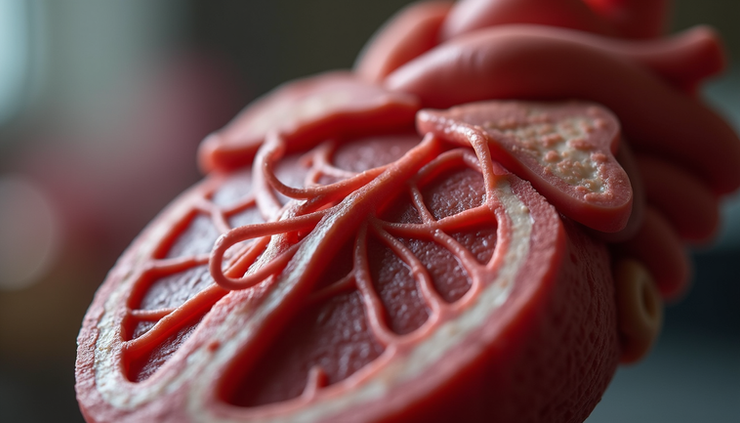
The heart has four chambers: two atria on top and two ventricles below. These chambers work in a coordinated cycle to move blood efficiently.
Right atrium receives oxygen-poor blood from the body.
Right ventricle pumps this blood to the lungs for oxygen.
Left atrium receives oxygen-rich blood from the lungs.
Left ventricle pumps oxygenated blood to the entire body.
Valves between these chambers prevent blood from flowing backward, ensuring one-way movement. The heart’s electrical system controls the heartbeat, sending signals that make the muscle contract and relax in a steady rhythm.
The heart’s structure supports its function:
Muscular walls of the ventricles, especially the left ventricle, are thick to generate strong pumping force.
Coronary arteries supply the heart muscle itself with oxygen and nutrients.
The septum divides the left and right sides, preventing mixing of oxygen-rich and oxygen-poor blood.
This complex design allows the heart to maintain a continuous, efficient blood flow that adapts to the body’s changing needs, such as during exercise or rest.
Emotions Commonly Associated with the Heart
The heart has long been linked to emotions, especially love and grief. This connection goes beyond biology into how humans experience and express feelings.
Love is often described as a “heartfelt” emotion. People talk about “heartstrings” being pulled or “heartbeats” quickening when they feel affection or passion. This association may come from the physical sensations of the heart racing or fluttering during emotional moments.
Grief and sorrow also connect to the heart. Expressions like “heartache” or “broken heart” capture the deep pain felt during loss or sadness. The heart’s central role in sustaining life makes it a powerful symbol for emotional suffering.
Scientific studies show that emotions can influence heart rate and rhythm. Stress or excitement triggers the nervous system to affect the heart, linking physical and emotional experiences.
The Heart’s Symbolic Connection to Death and Cultural Perceptions
Across cultures, the heart symbolizes life, but it also holds a strong connection to death. This dual meaning reflects the heart’s role as a life force and its vulnerability.
In ancient Egypt, the heart was believed to be the seat of the soul and the center of morality. During the afterlife judgment, the heart was weighed against a feather to determine a person’s fate.
In Western culture, the heart often represents both love and mortality. The phrase “heart stopped” is a common way to describe death, highlighting the organ’s link to life’s end.
Some Asian traditions view the heart as a spiritual center, connecting the physical body with the mind and soul. Death is seen as a transition where the heart’s energy moves on.
In Mexican culture, the heart appears in Day of the Dead art, symbolizing remembrance and the ongoing bond between the living and the dead.
These cultural views show how the heart serves as a bridge between life and death, body and spirit. It carries meaning far beyond its physical function, shaping rituals, art, and beliefs.
The heart is a remarkable organ that sustains life through its pumping action. At the same time, it holds deep emotional and symbolic significance. Understanding the heart’s biological role helps us appreciate its importance in health. Recognizing its emotional ties reveals how closely our bodies and feelings connect. Exploring cultural symbolism shows the heart as a powerful emblem of life, love, and mortality.

Comments